
A scalable learning management system designed for simplicity and real-world impact. Alchemy offers short, skill-focused courses that empower learners to build creative, income-generating abilities—whether they're leveling up existing skills or exploring a brand-new path.
This case study presents a modified version of the original work to maintain client confidentiality.
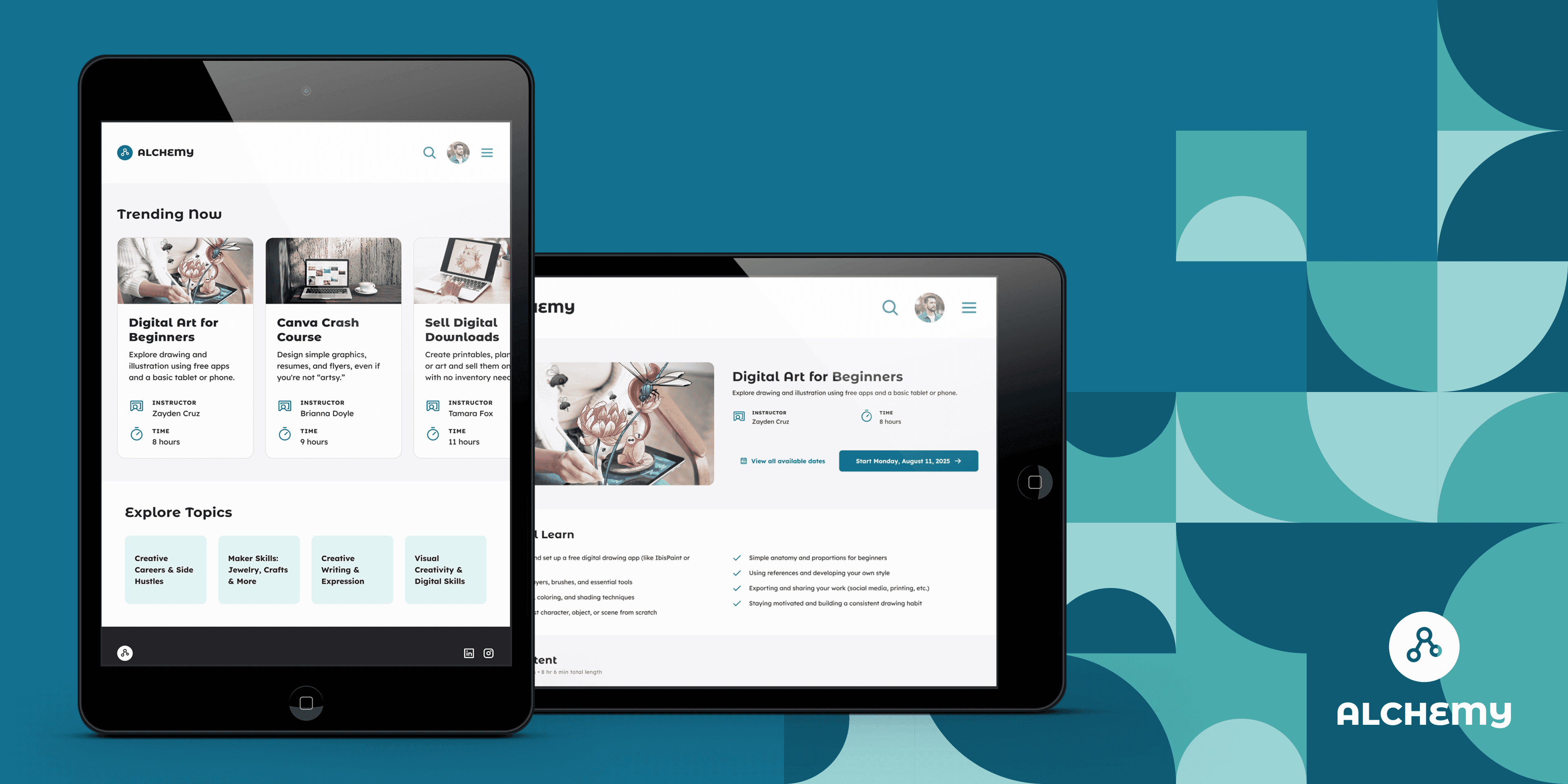
Alchemy was created to solve a clear problem: people want practical, short, skill-building courses that fit into real life—not traditional, time-intensive learning models. The Center for Applied Management Practices (CAMP) needed a learning management system (LMS) that was simple, flexible, and engaging, while supporting a wide range of learners and the educators who build content for them.
The challenge was to design an experience that felt approachable for beginners but powerful enough for experienced users. The platform needed to make learning feel less overwhelming, encourage forward momentum, and support clear pathways toward creative, income-generating skills.
Alchemy was designed with one core goal: make learning feel seamless and motivating from the moment someone logs in. I approached the project by mapping the end-to-end experience for learners and educators, identifying opportunities to reduce friction, simplify navigation, and strengthen engagement.
A few key pillars guided the design:
The interface emphasizes clarity and simplicity—clean layouts, generous spacing, and focused actions. Courses are intentionally modular, broken into short sessions to help learners build consistency and celebrate quick wins.
I introduced a clear learning hierarchy: cards for courses, simple progress indicators, and intuitive paths that show what's completed, what's next, and how far the learner has come. This structure supports motivation while keeping the experience lightweight.
For educators, the authoring environment needed to feel intuitive and flexible. I designed screens that make content creation straightforward, from organizing lessons to uploading materials. Consistent UI patterns ensured the system felt unified across both learner and educator workflows.
Alchemy was developed alongside Compass, the design system that powers it. Leveraging design tokens, cohesive typography, and theme-based visual language, the platform maintains accessibility, brand consistency, and long-term scalability.
Across every screen, the focus remained on supporting real-world learning habits—short sessions, clear goals, and minimal distractions.
Alchemy provided CAMP with a learning platform that is easy to use, easy to maintain, and adaptable as new courses and features are added. The streamlined learning model helped users stay engaged, reduced friction for educators creating content, and supported CAMP's mission of helping people build meaningful, income-boosting skills.
From this project, I reaffirmed the value of designing for real learning behaviour: keep things simple, give users structure, and minimize the cognitive load so learners can stay focused on what really matters—developing their skills with confidence.
Whether you need help shaping a new SaaS product, refining an existing web or mobile experience, or building a scalable design system, I'd love to hear from you.